About Kuttanad
Kuttanad is the low-lying delta south and east of Alappuzha where four rivers — the Pamba, Meenachil, Achankovil and Manimala — spread out before reaching Vembanad Lake. It is the lowest region in India, and one of the few places in the world where rice is grown below sea level, in fields protected from the water by earth dykes.
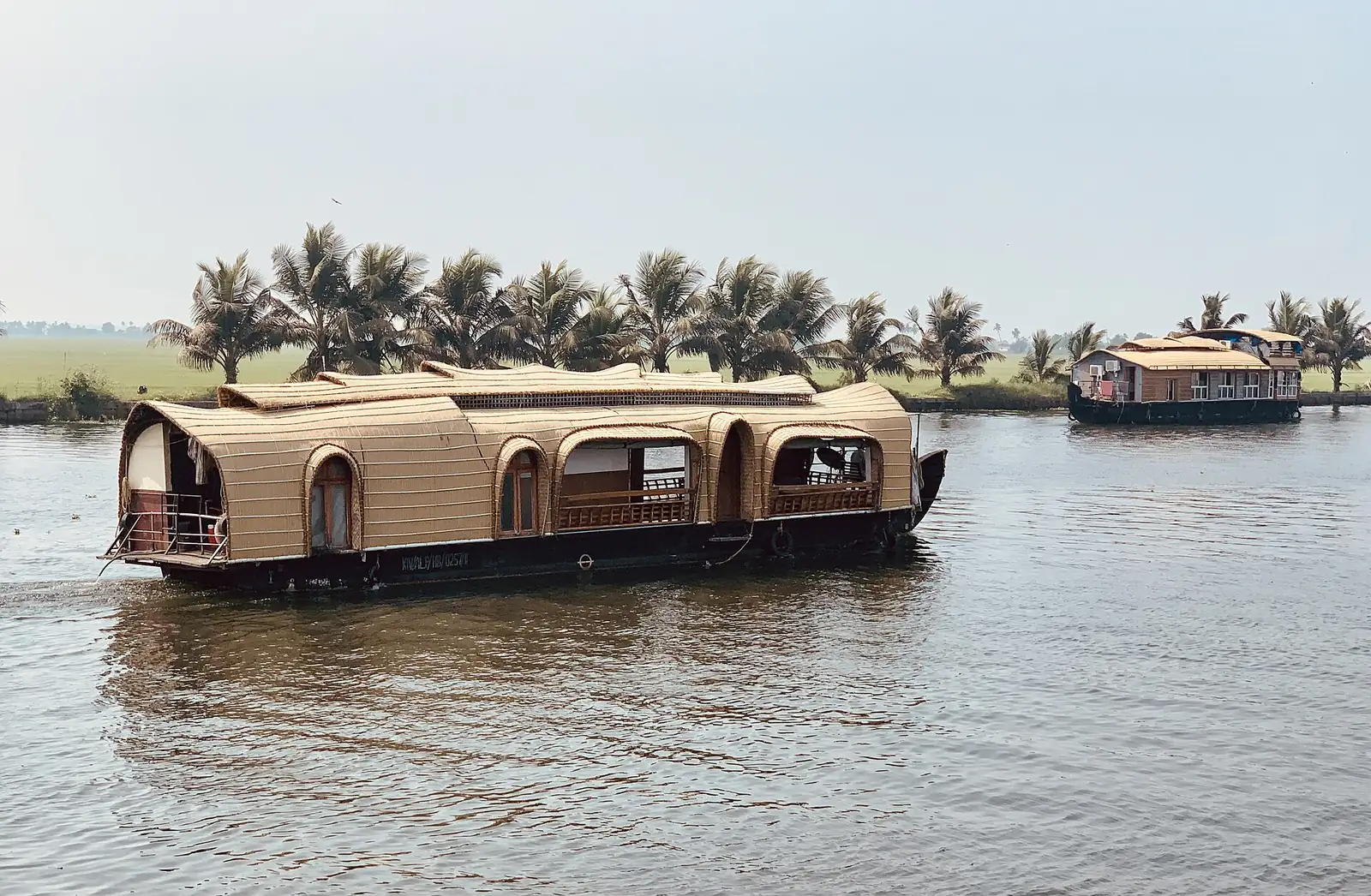
This is the landscape most houseboat routes pass through: green paddy on one side, water level with the top of the bank on the other, and villages strung along the canals with their churches, temples, toddy shops and boat jetties. Seeing it from a small canoe or shikara brings you closer still.
History
Kuttanad appears in the earliest Tamil Sangam literature, and the early Chera kings are said to have ruled from here. Much of the farmland was reclaimed from the lake and its marshes. In 2013 the UN Food and Agriculture Organization recognised the Kuttanad below-sea-level farming system as a Globally Important Agricultural Heritage System.
What to see and do
- Paddy fields lying below the water level of the canals beside them.
- Canal-side villages, churches and temples.
- A canoe or shikara through the narrowest waterways.
- Snake boat races on the lakes and rivers in season.
Getting there
Kuttanad begins just outside Alappuzha town. Most visitors see it on a houseboat or shikara from the Alleppey jetties; roads also run through the region towards Changanassery and Kottayam.
Tips for your visit
- A small canoe gets into canals that houseboats cannot.
- The paddy is greenest after the monsoon planting.
- Ask your boat crew to stop at a village for a short walk.
Kuttanad: common questions
Sources
Facts checked against these sources. Timings and entry fees change; we confirm them when we plan your trip.