About Ross Island
Ross Island, officially Netaji Subhas Chandra Bose Island since 2018, lies at the entrance to Port Blair harbour, about 3 km east of the city centre. For decades it was the headquarters of the British penal settlement in the Andamans, and the ruins of that time still stand among the trees.
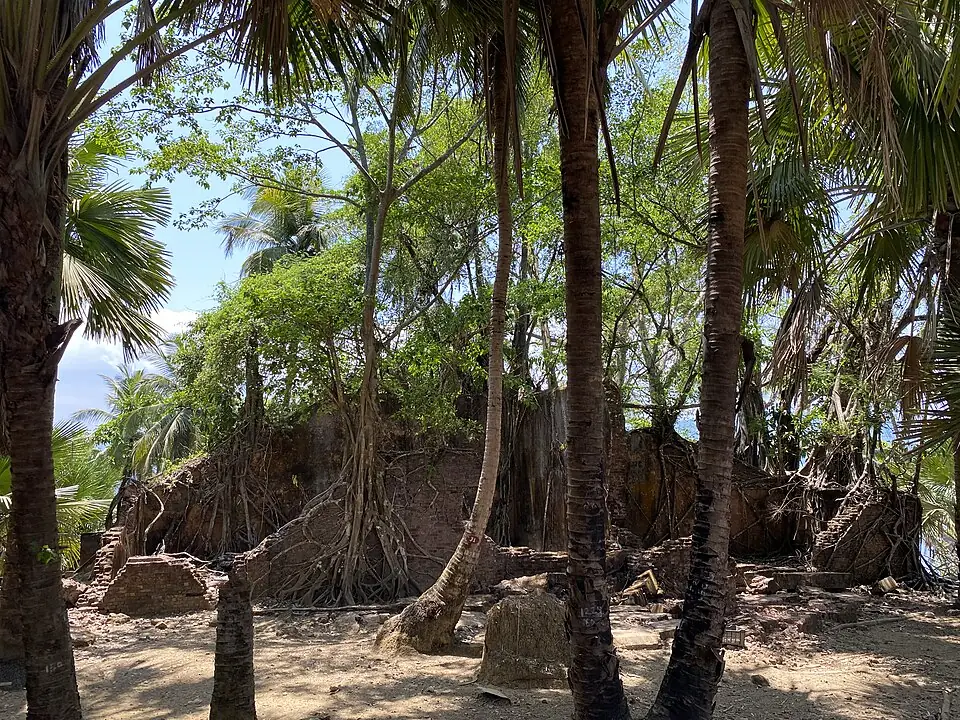
The ruins include a bazaar, bakery, stores, a water treatment plant, a church, a tennis court, a printing press, a hospital, a cemetery and the Chief Commissioner’s residence. Japanese bunkers from the Second World War stand beside them. Spotted deer and peacocks roam freely across the island, and a short path leads to a lighthouse on a rock near the northern end.
History
The British moved the penal settlement here in 1858 after setting it up at Port Blair, and the island stayed the administrative base for the Andamans until about 1945. The Japanese occupied it from 1942 to 1945, and the admiral used the old Government House; Subhas Chandra Bose visited in December 1943. After the Allies retook the islands the site was abandoned, and the Indian Navy took it over in 1979.
What to see and do
- The ruined buildings of the old penal headquarters, overgrown by the forest.
- Spotted deer and peacocks along the paths.
- Japanese wartime bunkers.
- The lighthouse near the northern tip, reached at low tide.
Getting there
Boats run to Ross Island from the jetty at Port Blair, a short ride across the harbour. Because the island is run by the Navy, visits follow set rules and timings, and we arrange your tickets.
Tips for your visit
- Wear comfortable shoes and carry water; there is little shade on the paths.
- Respect the ruins and do not climb on fragile walls.
- We confirm opening days and any restrictions when we plan your trip.
Ross Island: common questions
Sources
Facts checked against these sources. Timings and entry fees change; we confirm them when we plan your trip.