About Agra Fort
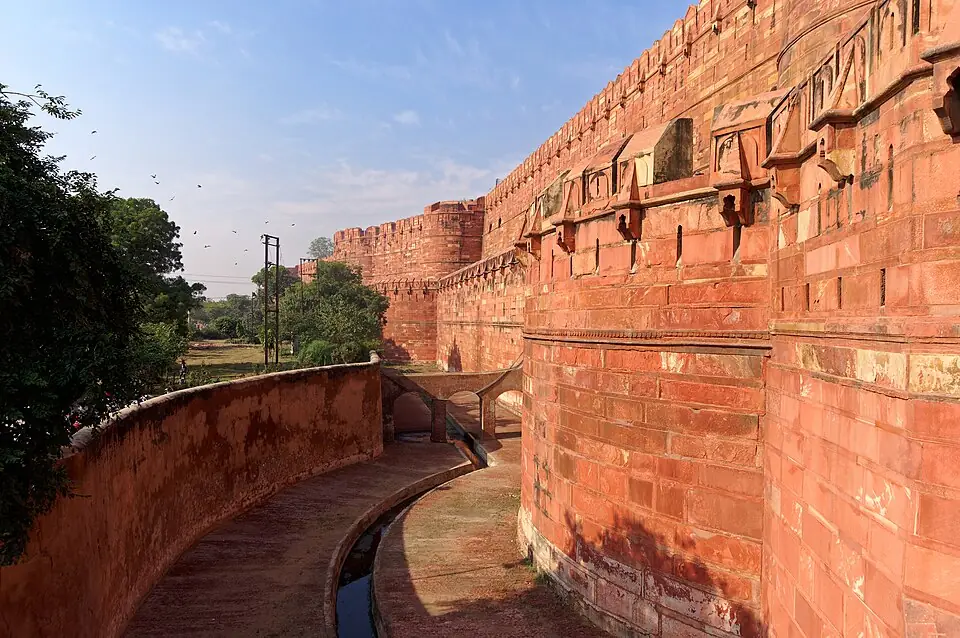
Agra Fort, also called the Red Fort of Agra, is a historic fort on the bank of the Yamuna, about 2.5 km northwest of the Taj Mahal. A brick fort stood on the site as early as 1080. The Mughal emperor Akbar rebuilt it in red sandstone between 1565 and 1573, and it was the main residence of the Mughal rulers until 1638, when the capital moved to Delhi.
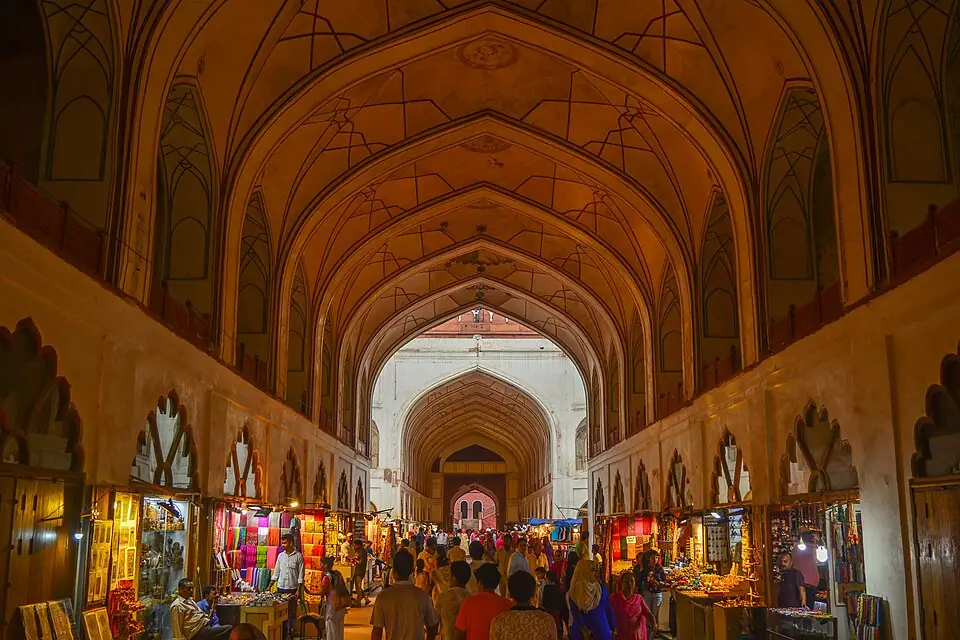
Much of the present interior dates from Shah Jahan, who added white marble palaces and mosques after 1628. The surviving Mughal buildings include the Jahangiri Mahal, the Khas Mahal, the Diwan-i-Am and Diwan-i-Khas, the Musamman Burj, the Shish Mahal and the Moti Masjid, and two main gateways, the Delhi Gate and Amar Singh Gate. The fort has a semicircular plan, with its straight side facing the river. A substantial part of it is still controlled by the Indian Army and is closed to the public.
History
The Marathas were the last Indian rulers to hold the fort, and the British captured it in 1803. UNESCO inscribed it in 1983 for its importance during Mughal rule.
What to see and do
- The red sandstone walls and great gateways.
- The white marble palaces and Moti Masjid.
- The Musamman Burj, with a view towards the Taj Mahal.
- The Diwan-i-Am and Diwan-i-Khas audience halls.
Getting there
Agra Fort stands beside the Yamuna in the centre of Agra, a short ride from the Taj Mahal. Both are usually visited on the same day.
Tips for your visit
- Hire a guide; the fort has many layers of history.
- Part of the fort is closed to visitors because the Army uses it.
- Combine it with the Taj Mahal and Mehtab Bagh.
Agra Fort: common questions
Sources
Facts checked against these sources. Timings and entry fees change; we confirm them when we plan your trip.