About Fatehpur Sikri
Fatehpur Sikri is a town about 36 km from Agra that Akbar founded in 1571 as the capital of the Mughal Empire. He used it until 1585, when a campaign in Punjab took him away, and it was fully abandoned by 1610. The name comes from the earlier village of Sikri, and the city was called Fatehpur Sikri, the "City of Victory", after Akbar’s victorious Gujarat campaign of 1573.
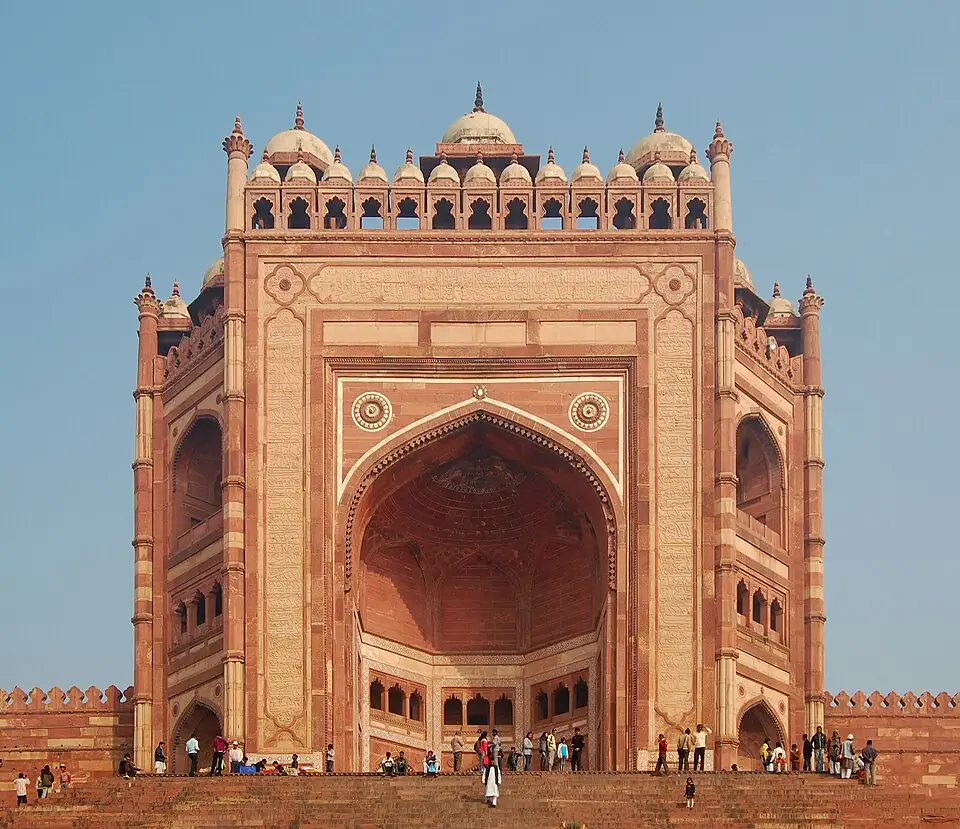
The site grew around the khanqah of Sheikh Salim Chishti, a Sufi saint who had predicted the birth of Akbar’s son Jahangir in 1569. Its buildings include the great Jama Masjid, the Buland Darwaza gateway, which rises 46 m, and the royal enclave with the five-storey Panch Mahal, the Diwan-i-Khas, the Khwabgah or House of Dreams, and the Pachisi Court. UNESCO inscribed the city in 1986.
What to see and do
- The Buland Darwaza, one of the most recognisable Mughal monuments.
- The Jama Masjid and the tomb of Sheikh Salim Chishti.
- The Panch Mahal and the royal palaces.
- The Diwan-i-Khas and Pachisi Court.
Getting there
Fatehpur Sikri is about 36 km from Agra and is usually visited on a day trip or on the road between Agra and Jaipur.
Tips for your visit
- Use a licensed guide; the site is large and has many stories.
- Dress modestly for the mosque and the shrine, and carry a scarf to cover your head.
- Go in the morning; there is little shade.
Fatehpur Sikri: common questions
Sources
Facts checked against these sources. Timings and entry fees change; we confirm them when we plan your trip.