About Humayun’s Tomb
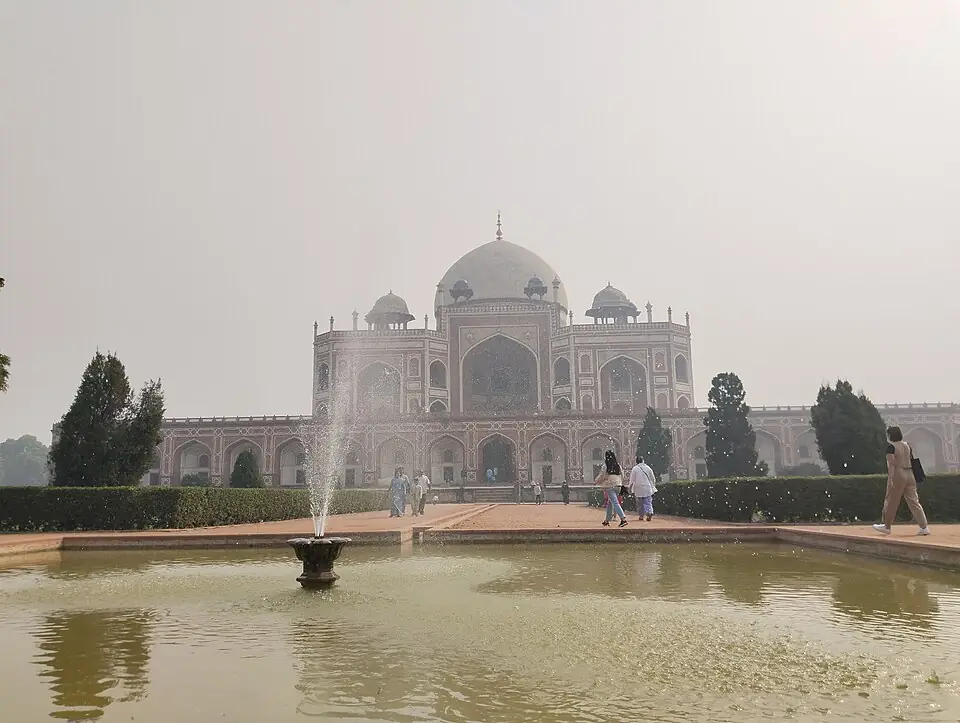
Humayun’s Tomb is the mausoleum of the Mughal emperor Humayun in Delhi. His first wife and chief consort, Empress Bega Begum, commissioned it in 1558, and she chose the Persian architects Mirak Mirza Ghiyas and his son Sayyid Muhammad to design it. It was the first garden-tomb on the Indian subcontinent and the first building to use red sandstone on such a scale.
The tomb stands at the centre of a formal charbagh garden, a style typical of Persian gardens but new to India. It marked a leap in Mughal architecture and set the pattern for later royal tombs, reaching its peak in the Taj Mahal. The complex also holds the graves of Bega Begum, Dara Shikoh and several later Mughal rulers, along with smaller monuments such as the Barber’s Tomb and the Nila Gumbad, or Blue Dome.
History
Humayun founded the citadel of Dinpanah, now Purana Qila, in 1538, and the tomb stands close to it. UNESCO inscribed the tomb in 1993, and a long restoration of the complex has since been completed.
What to see and do
- The tomb’s red sandstone and white marble dome.
- The symmetrical charbagh gardens.
- The Barber’s Tomb and other smaller monuments.
- The Nila Gumbad, with its blue glazed tiles, just outside.
Getting there
Humayun’s Tomb is in Nizamuddin East, in the middle of Delhi, close to Purana Qila. Taxis, the metro and auto-rickshaws reach it easily.
Tips for your visit
- Take a guide or audio guide; the complex has many smaller tombs.
- Photograph the dome from the garden paths in the late afternoon.
- We confirm opening hours when we plan your trip.
Humayun’s Tomb: common questions
Sources
Facts checked against these sources. Timings and entry fees change; we confirm them when we plan your trip.