About Lotus Temple
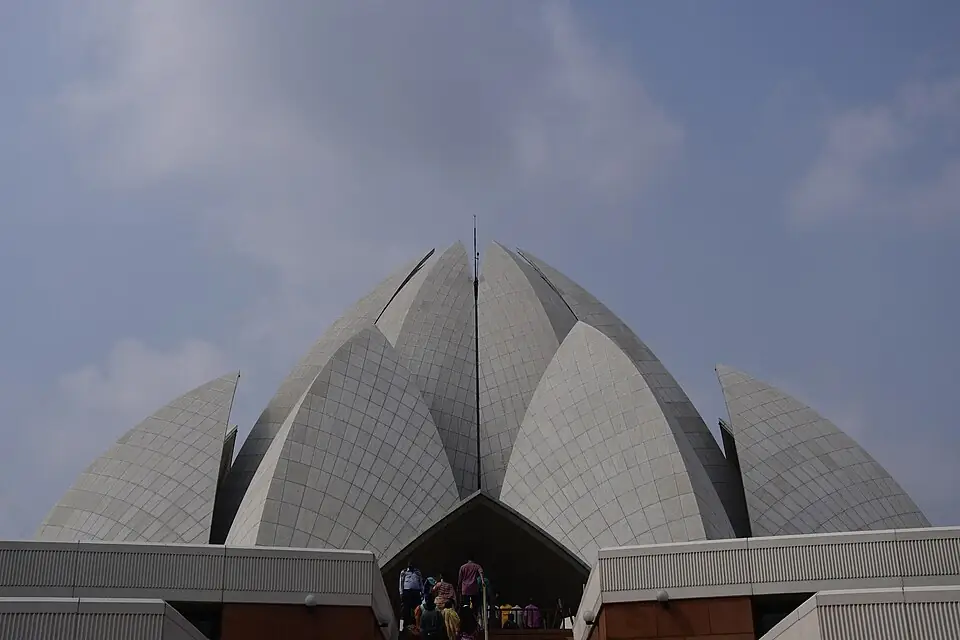
The Lotus Temple is the Bahá’í House of Worship in New Delhi, designed by the architect Fariborz Sahba. It takes the form of a half-open lotus, made of 27 free-standing, marble-clad concrete petals arranged in three rings of nine around a central hall. Construction ran from 1980 to 1986, it was dedicated on 24 December 1986, and it opened to the public on 1 January 1987.
It is among the most visited buildings in India, with several million visitors a year, and it has won awards for its design and engineering. Inside, the prayer hall is a quiet, open space. Programmes consist of readings from the sacred books of the major world religions, and at some times visitors can meditate or pray in silence.
What to see and do
- The lotus-shaped form of white marble petals.
- The silent prayer hall.
- The pools and gardens around the temple.
- A House of Worship open to people of every faith.
Getting there
The temple is at Bahapur in south Delhi and is close to a metro station, so it is easy to reach.
Tips for your visit
- Keep silent inside the hall, and follow the volunteers’ guidance.
- Photography inside is restricted; we confirm the rules.
- Go in the late afternoon; queues are shorter on weekdays.
Lotus Temple: common questions
Sources
Facts checked against these sources. Timings and entry fees change; we confirm them when we plan your trip.