About Jaganmohan Palace
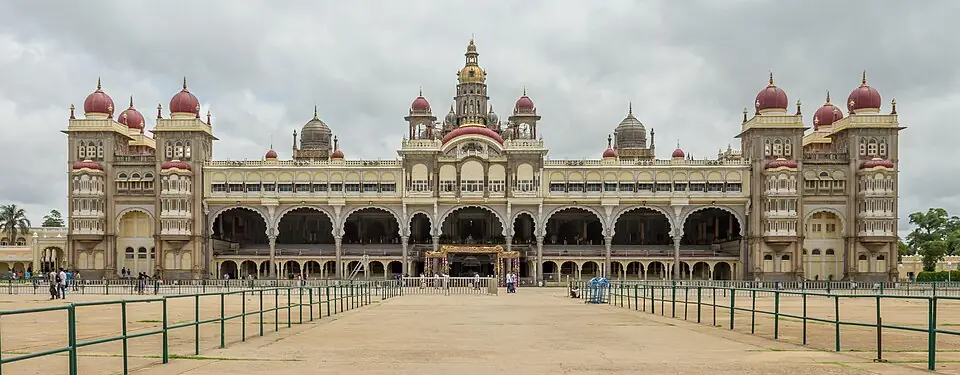
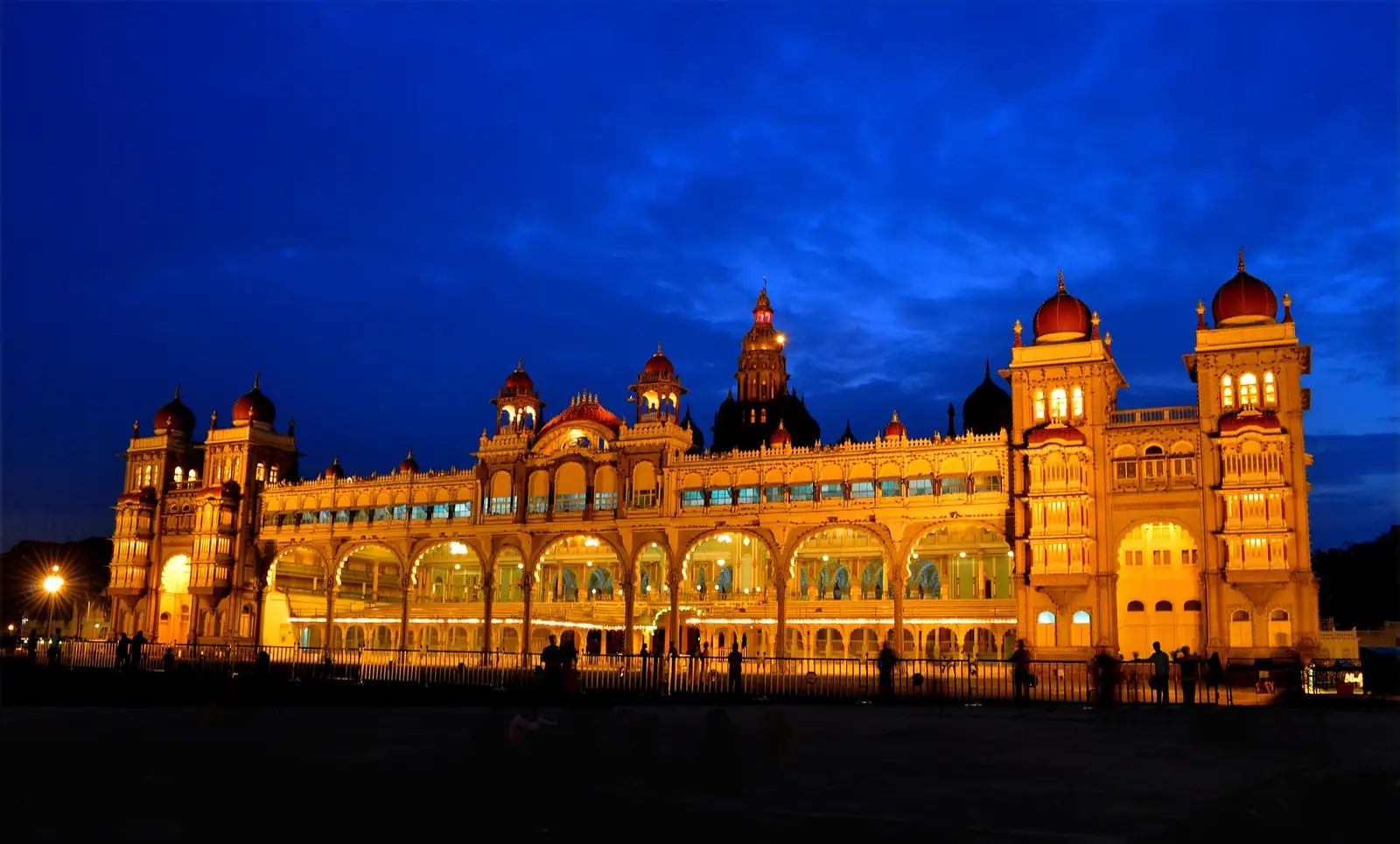
Jaganmohan Palace, a short walk west of Mysore Palace, is a royal mansion turned art gallery, home to one of the best collections of paintings in South India. More than 2,000 works hang here in Mysore, Mughal and other Indian styles.
The highlights are the paintings of Raja Ravi Varma, sixteen of them given by the last Maharaja, with scenes from the Ramayana and Mahabharata. A favourite with visitors is the “Lady with the Lamp” by S. L. Haldankar, hung alone in a dark room so that the lamp seems to glow. There are also paintings on grains of rice, viewed through a magnifier.
History
The palace was built between 1856 and 1861 for Krishnaraja Wadiyar III, who had lost control of the main palace to the British commission. The royal family lived here whenever Mysore Palace was being rebuilt — for the last time after the fire of 1897. It became an art gallery in the twentieth century and is also used as an auditorium.
What to see and do
- Paintings by Raja Ravi Varma.
- The “Lady with the Lamp” in its dark room.
- Paintings on grains of rice.
- The palace building and its old interiors.
Getting there
The gallery is about 200 m west of Mysore Palace, in the centre of the city.
Tips for your visit
- Photography is not allowed inside.
- It is much quieter than the main palace; a good midday stop.
- Some paintings are periodically away for restoration.
Jaganmohan Palace: common questions
Sources
Facts checked against these sources. Timings and entry fees change; we confirm them when we plan your trip.