About Jain Temple, Sulthan Bathery
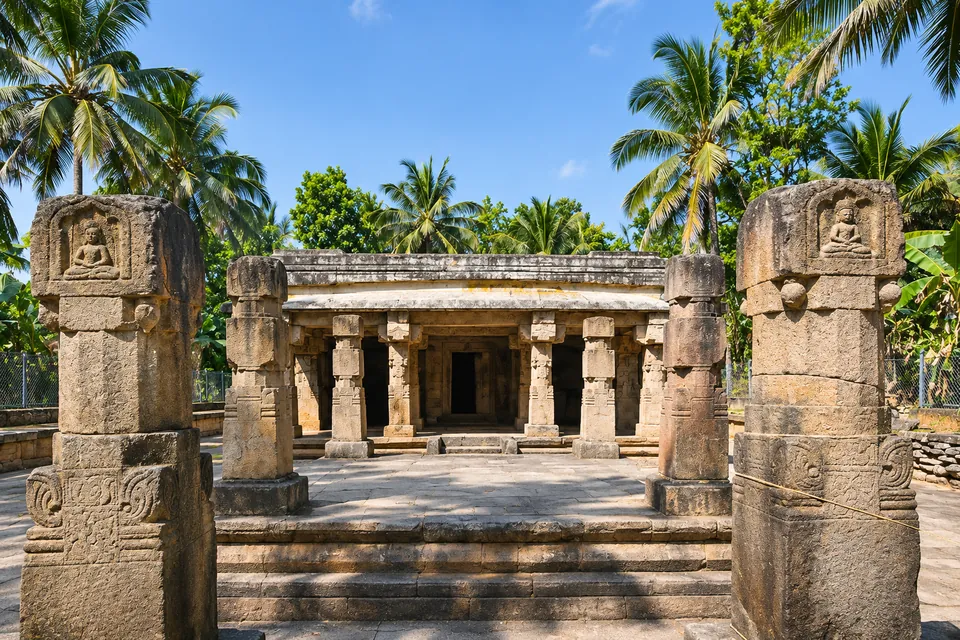
The Jain temple in Sulthan Bathery is a granite shrine in the middle of our home town, quiet and well kept, with carved pillars and a stone-slab roof. It is a reminder that Wayanad was once a meeting point of traders and faiths from Karnataka and Tamil Nadu.
It is a short, peaceful stop, and it carries a good story: it may be the reason the town is called Sulthan Bathery at all.
History
Jain families from Karnataka and Tamil Nadu settled in Wayanad from around the twelfth century, and this temple is believed to date from the thirteenth. It served first as a shrine and later as a trading centre.
In the eighteenth century the forces of Tipu Sultan, ruler of Mysore, are said to have used the temple as an ammunition store — a “battery”. British records called the town Sultan’s Battery, and the name stuck as Sulthan Bathery. The temple is now protected by the Archaeological Survey of India.
What to see and do
- The carved granite pillars of the main hall.
- The image of Mahavira in the inner sanctum.
- The simple, solid stone architecture, influenced by the Vijayanagara style.
- A quiet garden setting right in the middle of town.
Getting there
The temple is in Sulthan Bathery town, a few minutes from the bus stand — and from our office. Puthangadi, another old Jain temple, is about 20 km from Kalpetta on the Panamaram–Nadavayal road.
Tips for your visit
- Remove your shoes before entering and dress modestly.
- Combine it with the Edakkal Caves, about 10 km away.
- Opening hours can change. We confirm them when we plan your trip.
Jain Temple, Sulthan Bathery: common questions
Sources
- Jain Temple, Kidanganad — Wikipedia
- Jain temples, Sulthan Bathery — Kerala Tourism
- Sultan Bathery — Wikipedia
Facts checked against these sources. Timings and entry fees change; we confirm them when we plan your trip.