About Mecca Masjid
Mecca Masjid is the largest mosque in Hyderabad and one of the oldest, a massive granite prayer hall facing a wide courtyard just south-west of the Charminar. It is a working mosque, the city’s main Friday mosque, and it can hold around ten thousand people at prayer.
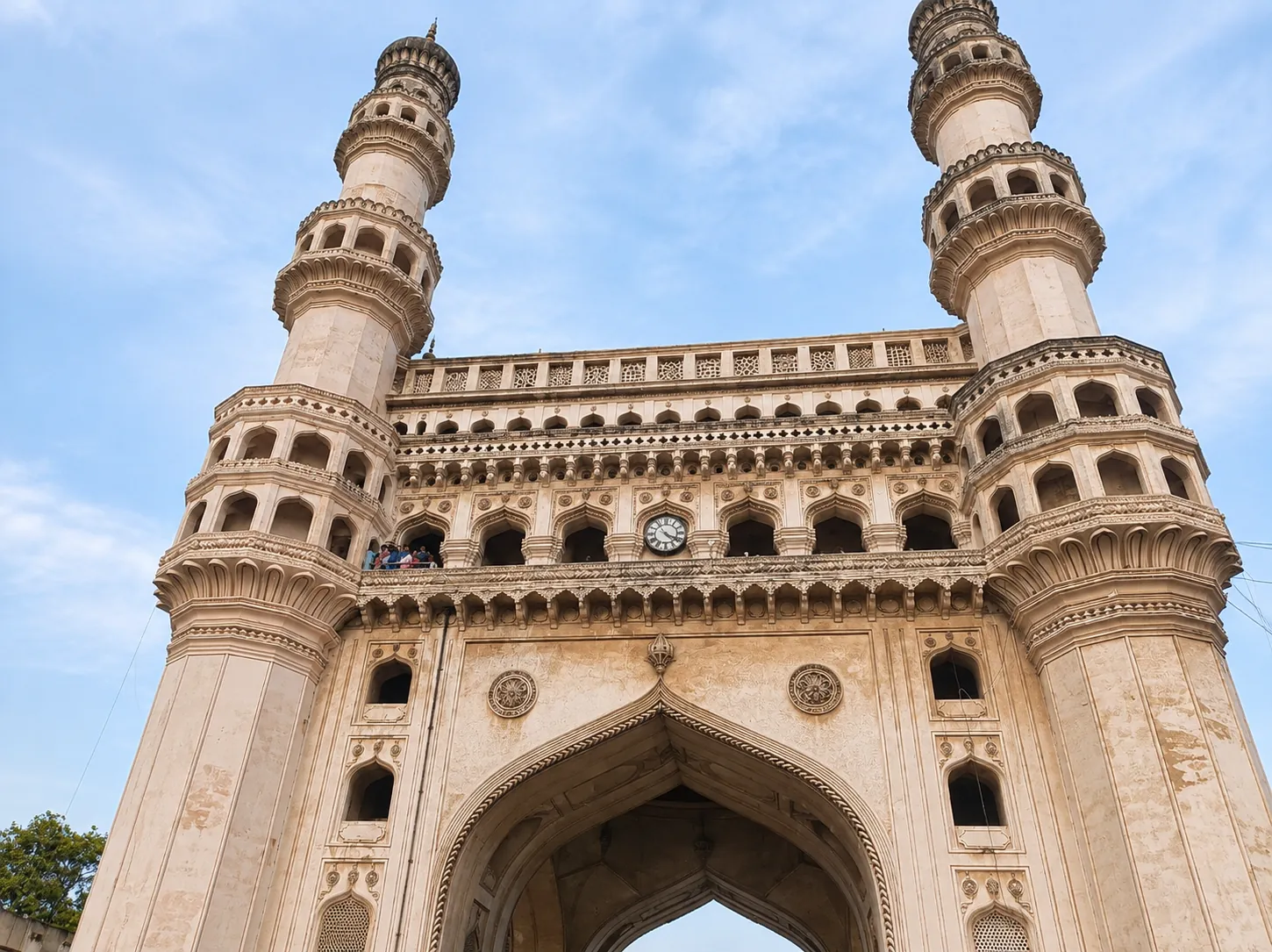
It is a short, rewarding stop on an old-city walk: the scale of the hall, the pigeons wheeling over the courtyard and the view of the Charminar’s minarets over the rooftops.
History
Construction began in 1617 under the Qutb Shahi sultans and took the best part of the century; thousands of workers quarried and dressed its granite. Tradition holds that bricks made with soil brought from Mecca were set into the central arch, which gave the mosque its name.
The Qutb Shahi kingdom fell before the mosque was finished, and it was completed in 1694 under the Mughal emperor Aurangzeb. Later, the tombs of several Nizams of Hyderabad were placed in an enclosure beside it.
What to see and do
- The great prayer hall, built of dressed granite with five arches on its front.
- The courtyard and its pool, with a view of the Charminar to the north-east.
- The marble tombs of the Asaf Jahi rulers beside the mosque.
- The old sundial and the remains of the bath house.
Getting there
The mosque stands in the old city, a couple of minutes’ walk south-west of the Charminar, on the way to Laad Bazaar and Chowmahalla Palace.
Tips for your visit
- Dress modestly, with arms and legs covered; women should carry a scarf.
- Avoid prayer times, especially Friday afternoon, when the mosque is for worshippers.
- Remove your shoes before entering the prayer area.
- Expect a security check at the gate. Visitor rules can change, and we check them when we plan your trip.
Mecca Masjid: common questions
Sources
Facts checked against these sources. Timings and entry fees change; we confirm them when we plan your trip.