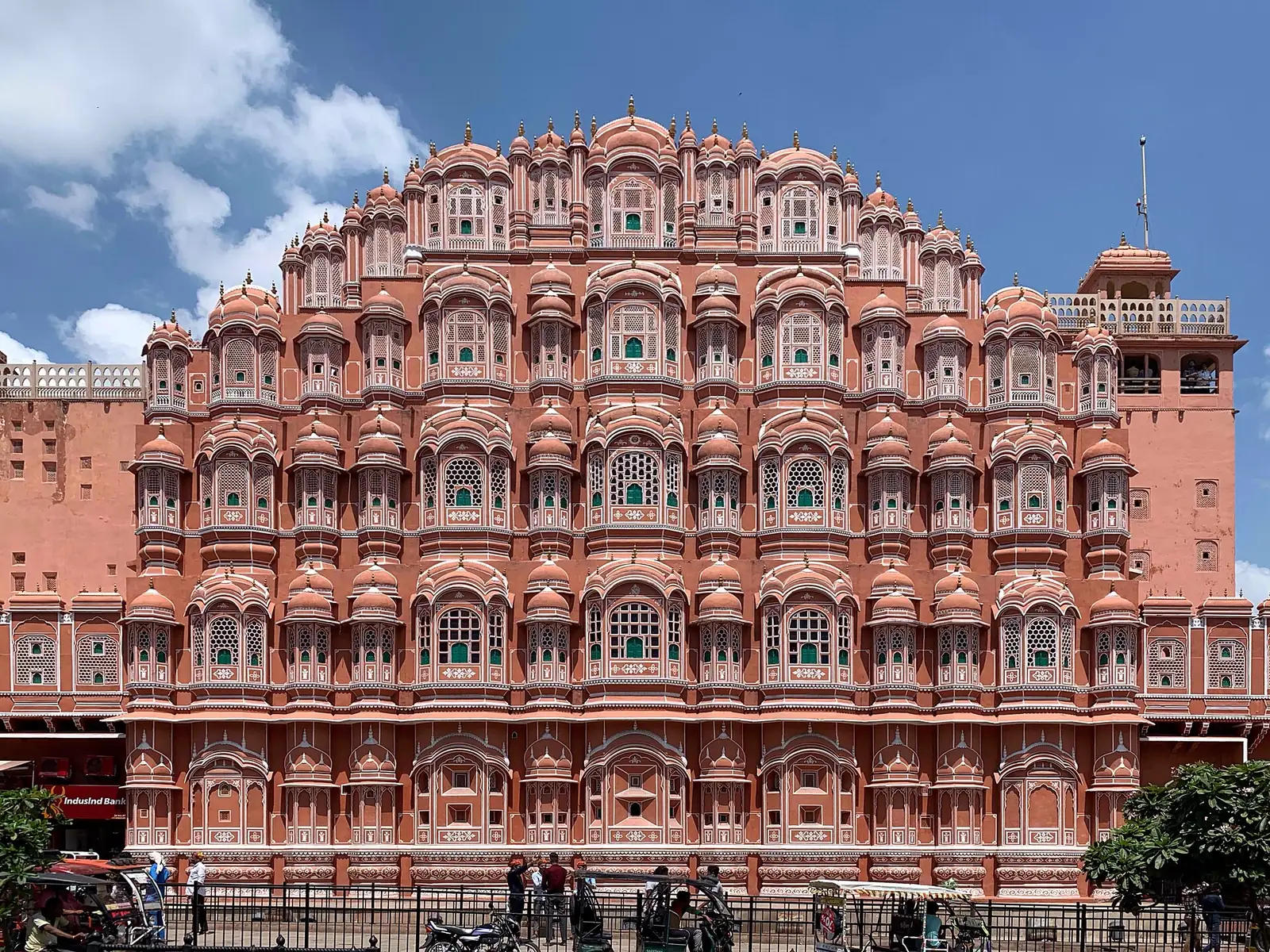
About Amer Fort
Amer Fort, also called Amber Fort, stands on a hill above Maota Lake near the town of Amer, about 11 km from Jaipur. It is the main attraction of Jaipur and a fine example of Rajput architecture, with some Mughal influence. Its large ramparts, series of gates and cobbled paths rise up the hillside.
The palace inside is built of red sandstone and marble on four levels, each with its own courtyard. It includes the Diwan-e-Aam, or Hall of Public Audience, the Diwan-e-Khas, or Hall of Private Audience, the Sheesh Mahal, the mirror palace, and the Sukh Niwas, where a cool air is created by winds blowing over a water channel. A temple to Shila Devi stands near the Ganesh Gate. The palace and Jaigarh Fort above it are considered one complex, joined by a hidden passage.
History
Amer was once a Meena state before it passed to the Kachwaha Rajputs, who made it their capital. The name is said to come either from the Ambikeshwar Temple on the hill or from the goddess Amba. The Maharajas lived here until the capital moved to Jaipur in 1727. In 2013 Amer Fort was inscribed with five other forts as the Hill Forts of Rajasthan.
What to see and do
- The Sheesh Mahal, or mirror palace.
- The Hall of Public Audience and the courtyards.
- The view over Maota Lake from the ramparts.
- The ascent through the Sun Gate (Suraj Pol), by jeep.
- The hidden passage to Jaigarh Fort, and the fort itself above.
Getting there
Amer is about 11 km from the centre of Jaipur, on the road towards Delhi. A narrow road leads up to the Sun Gate; jeeps are the preferred way up, as elephant rides are now discouraged.
Tips for your visit
- Arrive early, as the fort is crowded by mid-morning.
- Wear sturdy shoes; the paths are steep and cobbled.
- We confirm opening times and the best way up when we plan your trip.
- Combine it with Jaigarh and Nahargarh forts, which share the same ridge.
Amer Fort: common questions
Sources
Facts checked against these sources. Timings and entry fees change; we confirm them when we plan your trip.