About Hawa Mahal
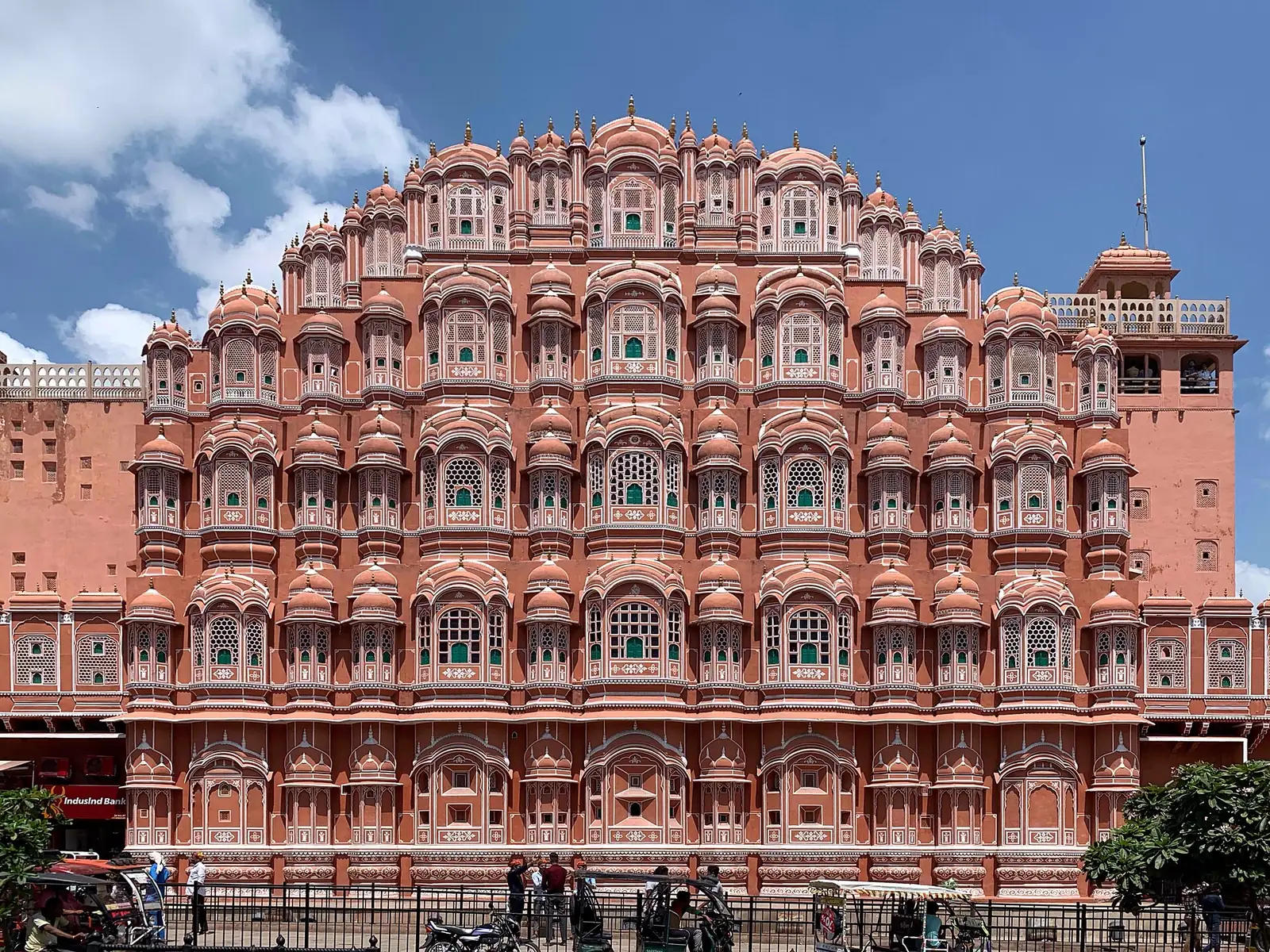
The Hawa Mahal, or "Palace of Winds", is the best-known building in Jaipur. It is built of red and pink sandstone, which suits the city’s name as the Pink City, and rises five storeys to about 15 m. Its famous honeycomb front has 953 small windows, called jharokhas, decorated with fine latticework.
The screens allowed the royal ladies to watch street life and festivals without being seen, and they let cool air pass through the building in summer. Many visitors take the street side for the front of a palace, but it is in fact the back of a building that extends into the City Palace complex. Behind the façade lie courtyards, fountains and rooms with very little ornament.
History
The palace was built in 1799 by Maharaja Sawai Pratap Singh, grandson of Jai Singh II, the founder of Jaipur, and designed by the architect Lal Chand Ustad. Pratap Singh was inspired by the Khetri Mahal. The building was renovated in 2006, after about half a century without major work.
What to see and do
- The honeycomb façade from the street, best photographed in the morning.
- The view of the street and the old city from the upper windows.
- The courtyards inside, quieter than the street.
- The nearby City Palace and Jantar Mantar.
Getting there
The Hawa Mahal is on a busy main street in the old city of Jaipur, close to the City Palace and Jantar Mantar. Auto-rickshaws and taxis drop you nearby.
Tips for your visit
- The best photographs are from the cafes and rooftops across the road; we can suggest one.
- The street is busy and noisy; keep your belongings close.
- Combine it with the City Palace and Jantar Mantar in one half-day.
Hawa Mahal: common questions
Sources
Facts checked against these sources. Timings and entry fees change; we confirm them when we plan your trip.