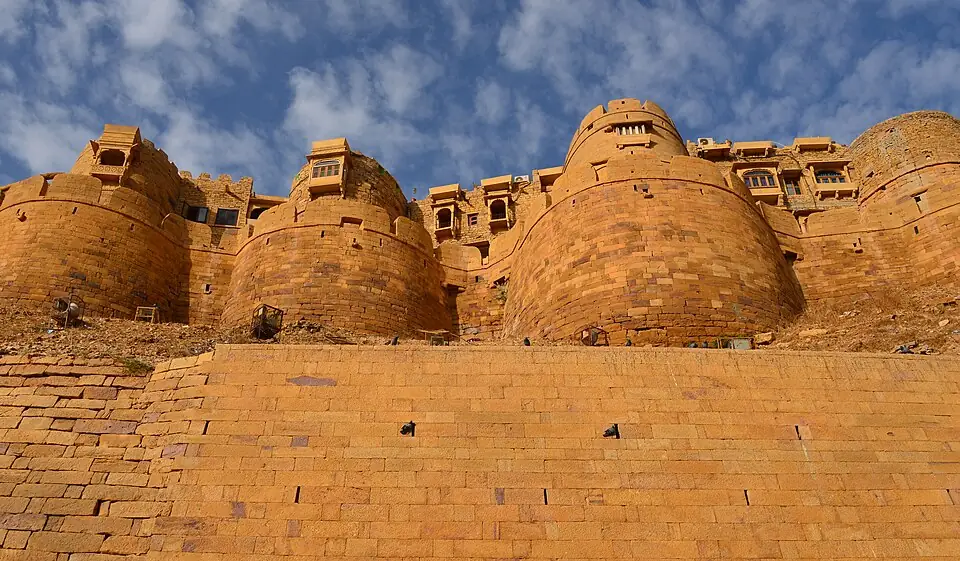
About Jaisalmer Fort
Jaisalmer Fort rises from Trikuta Hill at the southern edge of the city, in the middle of the sandy Thar Desert. It is one of the very few living forts in the world: nearly a quarter of the old city’s population still lives inside its walls. For most of its 860-year history the fort was the city of Jaisalmer.
Its massive yellow sandstone walls are the colour of a lion by day and honey-gold at sunset, which camouflages the fort against the desert and gives it the name Sonar Quila, or Golden Fort. The name Sonar Kella was made famous by the film of that name by Satyajit Ray, shot here. The fort stood at the crossroads of important trade routes, including branches of the ancient Silk Road, and is one of the six Hill Forts of Rajasthan that UNESCO inscribed in 2013.
History
According to legend, Rawal Jaisal, a Bhati Rajput, built the fort in 1156 after he was dissatisfied with an earlier capital at Lodhruva. Around 1299 it faced a long siege by Alauddin Khalji of Delhi, and fell to the Delhi Sultanate for some years before the Bhatis returned. People began to settle outside the walls only in the seventeenth century.
What to see and do
- Walking the lanes inside a fort that is still a neighbourhood.
- Carved havelis and temples within the walls.
- The ramparts at sunset, with the desert all around.
- Shops selling local textiles, leatherwork and silver.
Getting there
The fort is in the heart of Jaisalmer, and a short walk or auto-rickshaw ride from most hotels. Jaisalmer itself is reached by flights, trains and a long road from Jodhpur.
Tips for your visit
- Wear shoes with grip; the stone lanes can be slippery.
- Be mindful of residents; this is a living neighbourhood.
- Water is a precious resource in the fort; conserve it in your stay.
- We confirm opening times and tickets when we plan your trip.
Jaisalmer Fort: common questions
Sources
Facts checked against these sources. Timings and entry fees change; we confirm them when we plan your trip.