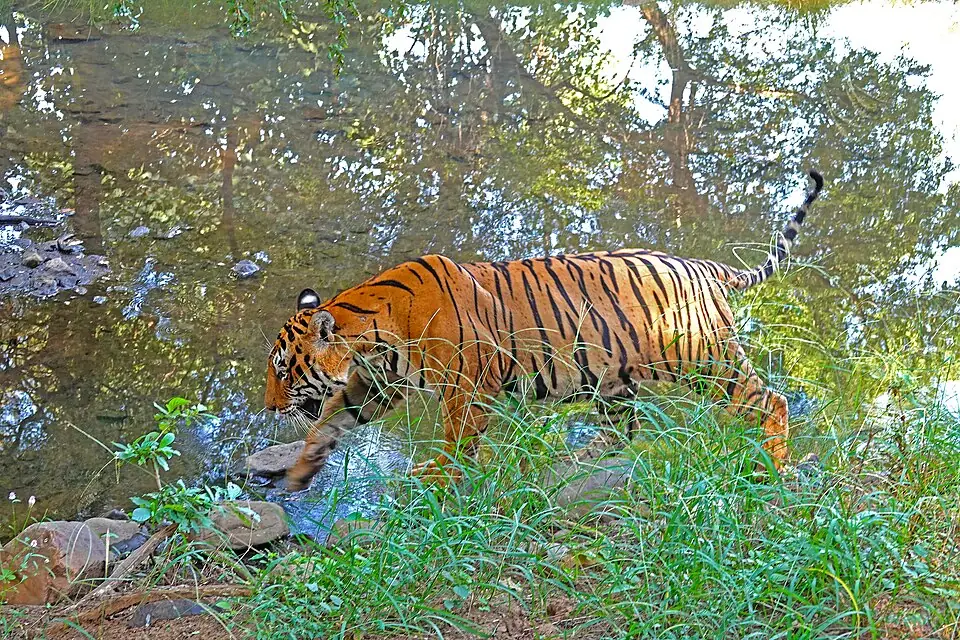
About Ranthambore National Park
Ranthambore National Park lies in Sawai Madhopur district between the Banas River to the north and the Chambal River to the south. It began as the Sawai Madhopur Game Sanctuary in 1955, became a Project Tiger reserve in 1974, and was declared a national park in 1980. Its area, including the Kailadevi and Sawai Man Singh sanctuaries, is about 1,334 sq km.
The park has dry deciduous forest and open grassy meadows, with lakes such as Padam Talao, the largest, which has a historic rest house on its edge. Ranthambore Fort, built in the tenth century about 210 m above the plain, stands inside the park with its temples. Wildlife includes Bengal tigers, leopards, sloth bears, striped hyenas, chital, sambar and more than 270 bird species.
What to see and do
- Jeep or canter safaris through the forest and meadows.
- The chance of seeing a tiger, though sightings cannot be promised.
- Ranthambore Fort and its temples.
- Lakes and birdlife, especially around Padam Talao.
Getting there
The park is near Sawai Madhopur, which has its own railway station on the Delhi–Mumbai line. Jaipur lies some distance away by road, and we arrange the transfer.
Tips for your visit
- Book safari seats well ahead; zones and slots are limited and allotted by the park.
- Wear muted colours, and carry a warm layer for early mornings.
- Follow your guide’s instructions and keep silent near wildlife.
- We confirm safari zones and seasonal closures when we plan your trip.
Ranthambore National Park: common questions
Sources
Facts checked against these sources. Timings and entry fees change; we confirm them when we plan your trip.